Интервю с MARKO HIETALA (NIGHTWISH, TAROT, SINERGY, NORTHERN KINGS)
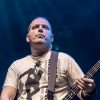
Marko Hietala is one of the most recognizable names in Finnish metal. A bassist, singer and songwriter who for nearly two decades served as a voice and steady backbone of the symphonic giants Nightwish, and the driving force behind his own band, Tarot. Today he continues as a solo artist with the albums Pyre of the Black Heart and Roses from the Deep.
It was a true honor for MetalHangar18 to welcome Marko as our guest. The conversation went wonderfully, deep and frank. He proved to be a first-class interviewee: he spoke just as candidly about music and craft as about the turbulent years of the Finnish metal scene and his most personal struggles. We thank him for his time and trust, and we look forward to his shows in Sofia and Varna next month.
Dimitar Stefanov: You grew up in Tervo and then moved to Kuopio at fifteen to study classical guitar, singing and music theory. How did that formal education shape the musician you were becoming, and was heavy metal always the destination?
Marko Hietala: There’s a serious pitfall with classical music and theory: it often ties your hands into the notation and the rules. I was lucky in that I started out just by myself. My older brother learned a few things, I checked out his stuff and learned more on my own, and only then went on to have some guitar lessons. I started out by playing and having fun with the instrument, finding things out for myself. That’s important if you’re going to grow up into a songwriter and keep your imagination in the music.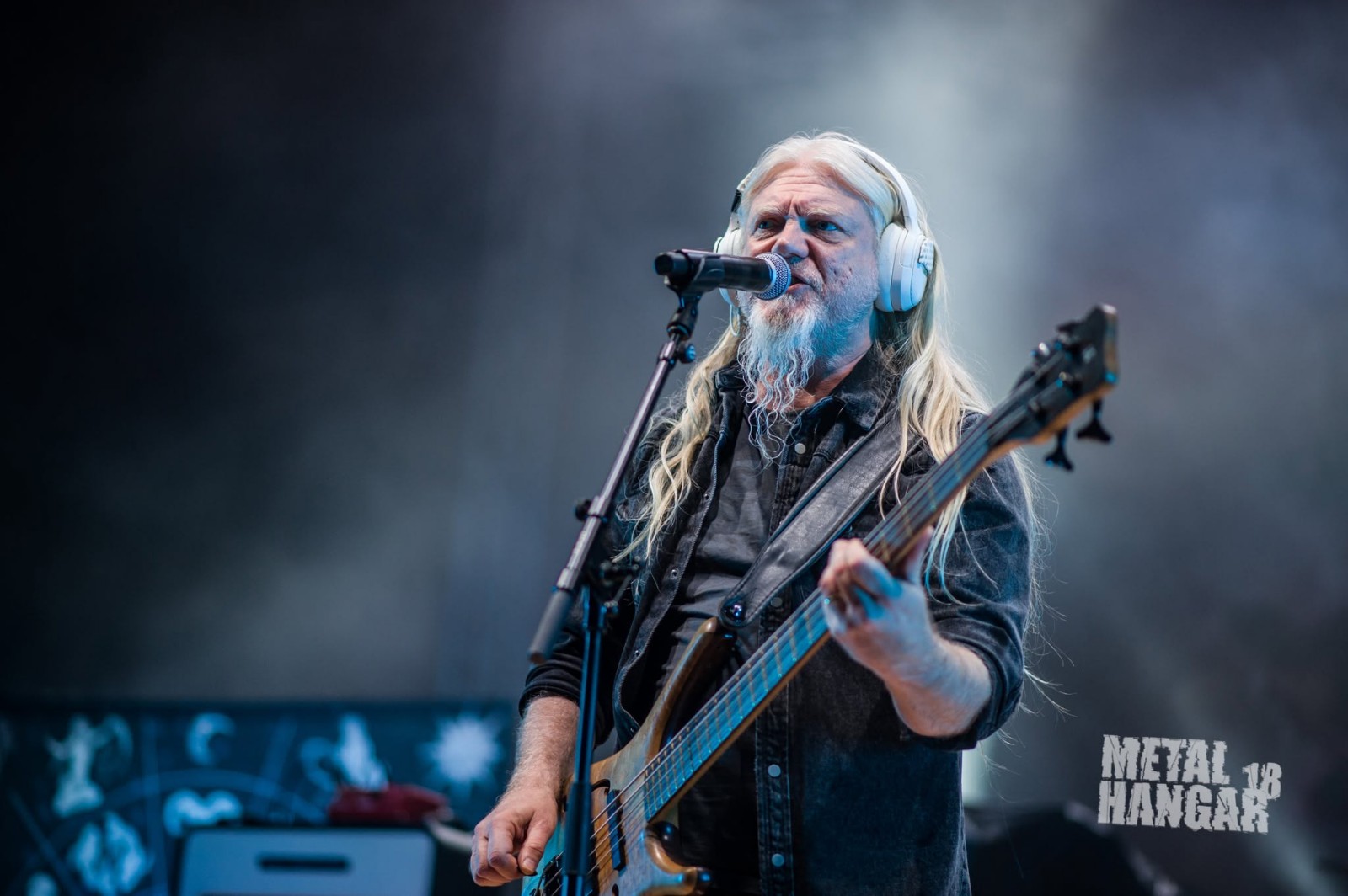
When I studied theory, there were lots of moments when I realized why something sounded bad or good, and I could hear it in some of the work that was trying to follow the rules too strictly. I learned that whenever there’s a rule in music, you can just as well break it. Anything that sounds good, any place, anytime, anywhere, is perfect. The rules are guidelines to look into when you’re not sure what to do. That was the main thing about theory for me.
Classical guitar has always been part of my playing. I’m both a finger and a pick player, mostly pick, but I still play a lot of acoustic these days, with fingers. As a bass player it would probably be a little constricting to write songs with just the four low strings, so most of the songs I’ve written have happened on the guitar.
Dimitar Stefanov: Which records or artists made you think, “This is what I want to do”? Were there any non-metal influences that might surprise people?
Marko Hietala: I grew into that rock-hero dream when I was very young, around ten or eleven. At that age it’s not as serious as it later became, but it was a spark that started early.
There’s a real soft spot in my heart for Celtic and Irish folk music. That’s part of my musical heritage. My dad used to listen to that, and a lot of old jazz, even some rock albums like the later Beatles, and some Finnish folk rock. There were a lot of musical influences in my youth.
But then I got into Black Sabbath when I was nine. My older brother borrowed the album from one of the neighbours, came in and put it on, and I was sold immediately. It was the scariest, heaviest thing that nine-year-old me had ever heard. And I was in love.
Dimitar Stefanov: Your stated bass idols are Geezer Butler and Bob Daisley. What is it specifically about those two players that speaks to you — is it the tone, the approach, the attitude?
Marko Hietala: The main thing I dig is that no matter how simple they play, or how much movement they put in, these guys are always solid. Think about Geezer Butler doing Perry Mason — every note is different. It doesn’t sound that hard, but they can play straight and steady through whatever you put in front of them, and improvise with accurate energy and groove. There’s a really steady bottom and really good timing. That’s what I love about them.
Dimitar Stefanov: So it’s always about the groove?
Marko Hietala: Very much. No matter how complicated and technical you get, if you can’t perform convincingly with a band that has the timing together, it’s only halfway done. It’s not ready.
Dimitar Stefanov: You’re known as a Warwick player. Are there other basses you’ve gravitated toward over the years, or that hold a special place for you?
Marko Hietala: Not really, no. My first was a Washburn. I had a Charvel and a Kramer, I still have the Kramer, actually, and it’s just as good as a good Warwick. But a good Warwick fits my playing really well. All Warwicks have certain identities. There’s a new one that’s really heavy with a really angry attack and really good sustain. I haven’t been taking it to rehearsals yet, but I think it’s going to be a stage piece, at least a spare for my beloved Infinity.
In the guitar department I have more favourites, like my twelve-string Guild from the early 80s. That’s a brilliant one, I love the sound.
Dimitar Stefanov: Does being a singing bassist change how you write bass lines, do they serve the vocal melody, or do they have their own independent life?
Marko Hietala: I build them independently and that’s exactly why I have to rehearse like an idiot after the album’s out, because the timing with vocals and the timing with the bass are two different things. The bass groove and tightness are essential, but so is being able to slide back and forth and hit the front note when the band comes straight on the one, all the little details that make the vocals and words more flowy.
How I deal with it usually is, if we have time for enough rehearsals, I might try to play and sing some things at the same time. But usually there has to be a demo piece, then I start working on the vocal lines. I usually have an idea about them, but then I work out the rest of the kinks. When we have a ready-made song that possibly ends up on the album, before live performances I rehearse so that I play and sing along with the album. You immediately hear what you’re doing wrong – where I hit that with the vocal, with that syllable, and then the bass comes there at the same time or а different time. So I kind of analyze what I’ve done at that point. Then I just have to nail it together one way or another.
Dimitar Stefanov: I’ll bring you back to the past. What was it like trying to make heavy metal in Finland in those early years, with your brother Zachary and Tarot?
Marko Hietala: That was hard for us. The 80s started out really good, but then thrash metal took over in a big way, and we were playing more in the vein of the New Wave of British Heavy Metal. In a country the size of Finland we got kind of sidelined, and getting out of that was really hard. We did things in the 90s, but it was a long, hard decade. Lots of cold, lots of hunger.
Dimitar Stefanov: You kept Tarot going during the Sinergy period, from 1999 to 2002, and then Nightwish came calling. After 2001, was Tarot in effect the side project?
Marko Hietala: Not really. It’s a band, or, to define it better, by then it had become a collective of guys who’d been doing things together for a good while, and that affected things. For instance, coming to 2003 and starting work on the Suffer Our Pleasures album: we hadn’t been doing much except a few occasional shows, but we’d never really split up. Then it was like, “Hey guys, I’ve got these ideas and lyrics” and they had song ideas, and we just got together for five days to see if we could write something nice. We had a new song structure and a demo of it every day — five songs written in those five days.
I hadn’t written all the lyrics; I had ideas. For “I Rule” I had all the lyrics and then Saku had the riff; we fiddled around with it, with Saku and Janne, and the song just came to be. The next day we started on “Pyre of Gods” I didn’t have all of it, but I had the idea and a couple of lines of verse and a chorus. For that one I had to write a lot more lyrics and revise.
Dimitar Stefanov: You joined Nightwish in 2001 when Tuomas Holopainen called and said there was a place for a vocalist and bassist. You already knew the band from touring with them. What was that call like and did you hesitate?
Marko Hietala: Of course I was surprised. We already had common escapist ground with Tuomas, we’d found that out when I was touring with Sinergy alongside them: the movies, sci-fi, fantasy. I guess we’re dreamers. So personality-wise I wasn’t that surprised. But I was also ten years older than the guys, so I was surprised they’d considered me. From what I heard once I joined, I brought a lot of feet-on-the-ground attitude too.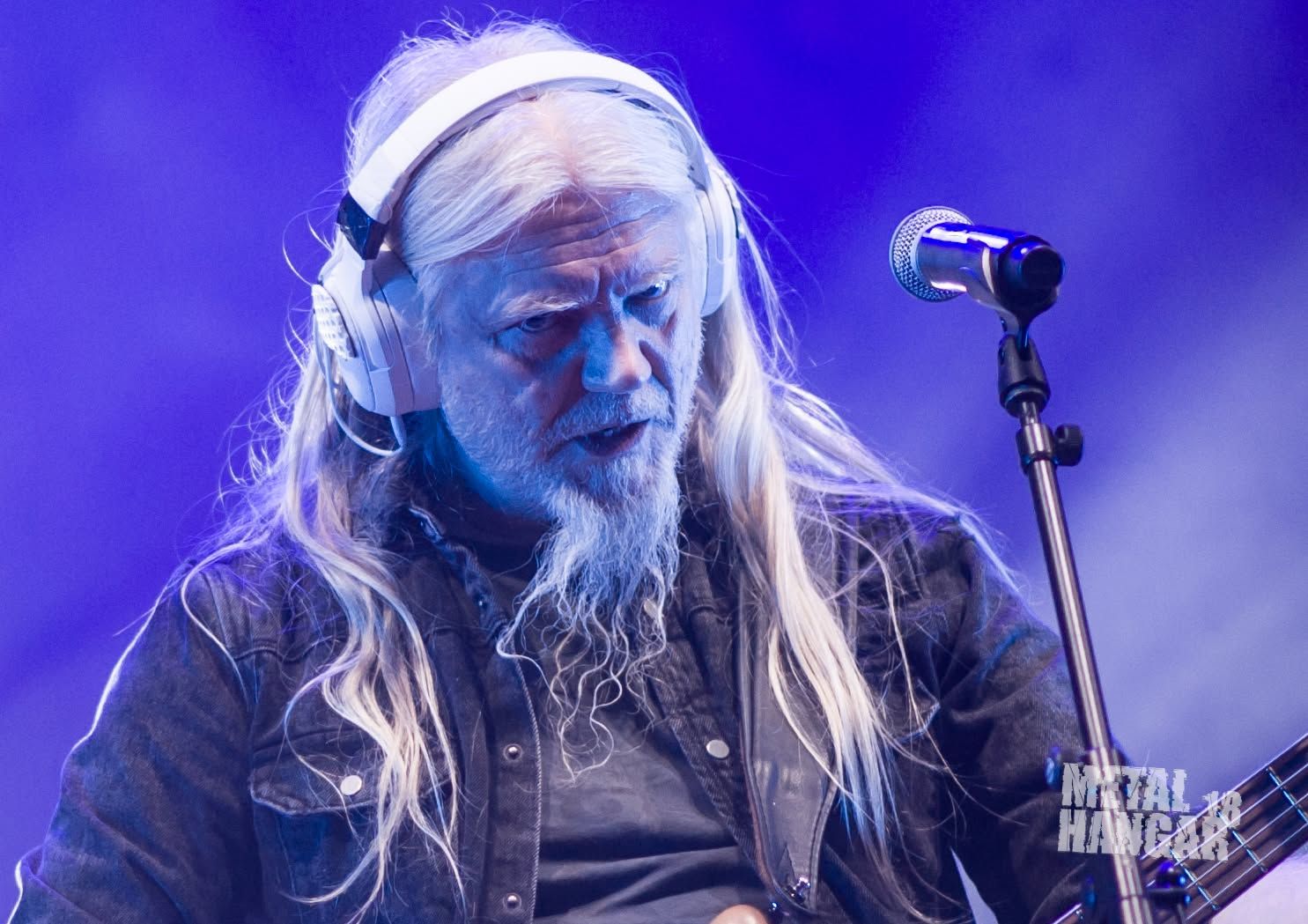
I’d been around ten years longer and hadn’t had the fast success they did. The main reasons for their rise were Tuomas’ songwriting and Tarja’s unique sound, they got big pretty fast. And at the end of the 90s, when they came out, the Finnish scene had opened up to Europe, so their album spread and they got to tour; the whole band turned into a professional moving machine within a few years. For me it was exciting, let’s see how this kind of structure works. It worked pretty well: after that first album with me came Once and the single Nemo, and suddenly the band had doubled its audience.
Dimitar Stefanov: Century Child and Once were massive albums, what was the defining quality of the Tarja era from the inside?
Marko Hietala: Century Child was my first album in the studio with the guys, so I wasn’t certain what was expected of me, but I was given free rein. If a chord arrangement went from here to there, I could decide what my bass line did. If I wanted to go against it – chords down, I go up, whatever — a lot of those things just ended up in the arrangements. I guess I’m pretty good at what I do, good enough to make an impression.
Same thing on Once, but by then I’d already been in the band a while, done quite a few shows and tours with Century Child, all the way to South America and Europe. I was more part of the band, the personal chemistry was stronger, and there was a definite togetherness in the attitude, Tarja and everybody included. When we started rehearsing and demoing, we recognized that we had something strong, both as songs and as a band attitude. Playing lots of shows had tightened up the groove a lot. I count myself as part of that, because I aim to fit myself to the drums and the basic rhythm as well as I can. And when you do that, it naturally pulls the others toward that centre of gravity. So the band on Once is definitely groovier than on Century Child.
Dimitar Stefanov: Transitioning from Tarja to Anette was a seismic shift for the fanbase. How did it affect the internal dynamic, and how did the band support Anette?
Marko Hietala: I definitely like her vocal work, I do. And I still think Imaginaerum, with all its wildness and crossover jumps between genres, even toward jazz (if you can call it jazz when totally ignorant rockers play it). But that’s the attitude the band always had to its work: we were proud of the versatility we could reach. We didn’t have to cater to mainstream rules; we could write our own. You could call it symphonic metal, but I’d say it always had a whiff of progressive metal. And Imaginaerum is definitely an example of that.
Dimitar Stefanov: Your vocal role became more prominent during the Anette era. Was that a conscious decision, or did it evolve naturally?
Marko Hietala: I’ve always left that decision to Tuomas, if I have demos, I give them to him and he calls the shots on who sings, based on his lyrical ideas. I’ve always had, and still have, respect for him about the band’s long-term success — that’s been his writing. In the beginning it was great to have Tarja as a vocalist, and we didn’t close off the possibility of another classical voice, but then we found this completely different yet really good vocalist, and we went that way.
Tarja’s voice was essential for the success at the start, that combination of a unique voice and the songs. But in the end the lasting success is about the songwriting, because the vocalist did change. And the band is on its third singer now, it changed again, and it kept its success. That speaks to the quality of the work, which is always what we paid attention to, no matter who was there.
Dimitar Stefanov: Nearly two decades in one of the world’s most successful symphonic metal bands — what was the biggest reward, and the biggest challenge?
Marko Hietala: The biggest rewards are definitely the great times and great victories we had together, going out into the world and spreading that vibe. What’s great about music and a band, when everything’s fine, is that within an hour and a half you can put a grin on someone’s face that lasts a week. And being part of the group that does that collectively puts a hell of a grin on everyone’s faces too! It’s the great vibe that feeds back and forth – the band, the audience, that bubble where you feed each other.
Now that I think about it, I always feel great about it, and I still do. I haven’t stopped doing shows. With my own band, with the Tarot boys for the 40th-anniversary album, and the Christmas tour every year with a bunch of great guys. The result is usually the same: people get crazy, everybody says, “Yeah, this is great.” It keeps me going, and from what I see it really helps a lot of people get through the mundane weekdays and work. That’s basically the greatest thing you can achieve.
The hard things, especially toward the end, were the depression and anxiety I started to suffer. I had a lot of unsolved issues, and had to admit I’d been subjected to some serious mental violence. The undiagnosed ADHD I had at the time was the real reason for those feelings: the anxiety, the depression that medication wouldn’t help, having to switch meds.
And the feelings of alienation and worthlessness had been there ever since childhood. I never thought I’d have a problem with self-esteem. I was always sure of who I am, that I know what I’m doing, that this is my thing. I happily admitted I’d never be able to hold a day job. But evolution made us social pack creatures, and the alienation that comes when you’re one in five or one in six means you constantly end up in situations where nobody quite understands you, and you don’t quite understand them. There’s always the social distance, and therefore 70% of ADHD people get that anxiety and depression and feelings of worthlessness. It’s serious shit.
I was only diagnosed once my inner darkness had grown so bad that I had to leave everything. Leave Nightwish, leave basically all the commitments I’d made. I had to break away, and go find out what was wrong with me, because my meds had stopped working again. I had to find out, just in order to keep living, because the everyday pain wears you down really badly. I had it for years: waking at night, immediately into the feeling, “Oh no, another day to get through, conscious, with my thoughts.” It got to the point where I’d think, “There’s the lake, there’s thin ice in the autumn, so when the dark comes, I’ll walk over it and see how far I get. I might just disappear.”
Dimitar Stefanov: On that topic — what would you advise young people who suspect they’re dealing with these issues? How should they seek help?
Marko Hietala: The most important thing is to find even one person who’ll take you seriously, who’ll listen to how you feel. Not what you said, not what you did, not what they said or did, but how you feel. Just one other person like that is a big step ahead.
Dimitar Stefanov: One last Nightwish question. Is there a scenario where you could imagine standing on a Nightwish stage again and what about the more ambitious idea, a show or tour featuring all three singers, something like the Helloween “Pumpkins United” model?
Marko Hietala: It’s a beautiful idea. If something like that came up, I’d start from the position that yes, I’m in. But we’d also have to look at the structure and the management, because especially when we crossed over to the other side, there were people putting a lot of influence on people in the band. Some of them didn’t even believe I was depressed. From what I’ve heard, seen and verified afterward, some were actively speaking against me, claiming my problems were an excuse.
But I have to say, I also know where that idea originated, and it wasn’t within the band, and it wasn’t within the management either. A bitter person managed to convince a few others and once you’ve convinced a few others, that’s how social circles work, the idea spreads.
Dimitar Stefanov: Northern Kings is a fascinating concept, four Finnish metal frontmen reimagining songs from other genres through a heavy-metal lens. How did the idea start, and what kept you coming back to it after the 2022 revival?
Marko Hietala: About the revival, it was one show, but it showed you can get there when the stars are right. It was a fun thing. We already had the Christmas tour going. I first toured with them back in 2006 and over the years it collected immense success, with a lot of the band members and vocalists who’d been there originally.
Northern Kings actually came up in the circle of Raskasta Joulua, the Christmas tour, because the guitar player, Erkka, is there, along with other band members. We were all vocalists, and the idea was: what if we did some covers, like an Il Divo line-up? If you remember Il Divo, those four classical vocalists who had a couple of big hits in Europe at the time. We realised we could have a nice line-up for a kind of heavy Il Divo. It caught fire, Warner got interested as a record company, and we did it.
It’s a group again, with some really great guys and great pros for vocals and playing, so I’d be happy to do more with them. Everybody would, from what we’ve discussed, but we’ve all got our own bands and projects. When you’ve got four or five people in a band plus four vocalists, that’s nine people with different projects, so getting the timing right is really hard.
Dimitar Stefanov: Left on Mars became a fan favourite almost instantly. How did that collaboration with Tarja come together?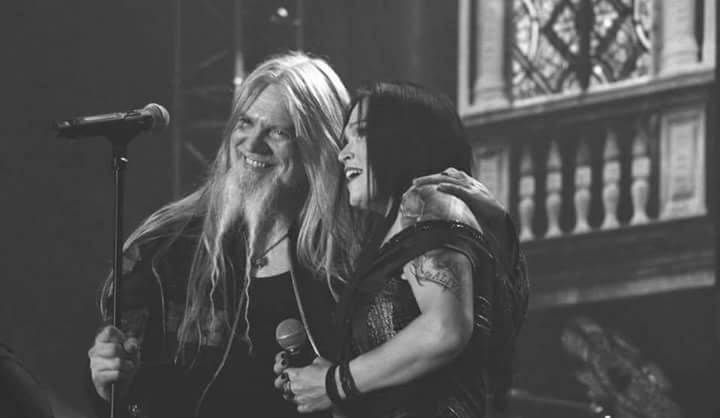
Marko Hietala: First of all, we’d already fixed our personal relationship back in 2017, meeting at the Christmas tour I mentioned. Tarja came over to sing some things. We went over a lot of ground, and came to the realization that the worst thing that happened back then was that we both lost friends.
Then a couple of summers ago, Tarja sent me a message that our two bands would be playing the same festival in Switzerland, and asked if I’d be interested in covering The Phantom of the Opera with her. I was like, “Damn, exciting, yes!” At the same time we were demoing the Roses from the Deep album, and one of the songs was Left on Mars. Tuomas had already said we could make a really good duet out of it. I wasn’t sure, because I’d written it as a kind of love song, about the distance my wife had to cross in order to survive with an unstable, seriously depressed guy. But then I looked at it and saw you could read it as two people in exile, lovers, and it would work as a duet.
When Tarja sent that message about Phantom, Tuomas and I looked at each other very meaningfully, we knew who to ask to sing the duet. So we put the demo on a USB stick; I went to the festival in Switzerland and gave Tarja the stick: “This is the song. If you’d like to do it as a duet, we’re recording it soon.” And we did The Phantom of the Opera and it was great. People were crying and laughing at the same time, and we stood there with our mouths hanging open: what the hell just happened? You could cut the atmosphere with a knife. A great moment, for both us. Then Tarja listened to the song and said, “This is nicely prog and good, let’s do it.” So we made a video and everything, and now I’ve paid her back by singing on her album. That’s the gentleman’s and gentlewoman’s deal we made: she said, “If I sing on your album, when I do my next one, you sing on mine.” I said, “It’s a deal.”
Dimitar Stefanov: Is there more music coming from the two of you, or was this a beautiful chapter with a natural ending?
Marko Hietala: I can’t make any promises, but now that we’ve done these things together, Left on Mars led to us keeping more professional contact. We ended up touring together, and now I’m on her album, so I see it as something that’ll happen every now and then, at least. But she’s got her own project, with really nice guys in her band, and I’ve got really nice guys in mine, and everybody knows each other, so we don’t want to shake that foundation too much. We’ll end up doing things together.
Dimitar Stefanov: Pyre of the Black Heart came out first in Finnish, as Mustan Sydämen Rovio. What did it mean to start that solo journey in your mother tongue?
Marko Hietala: It was something I’d wanted to do for a long time. People have the wrong idea that the album was written first in Finnish and then in English. In fact it was about 50/50. Six songs in one language, the rest in the other. I can’t remember the exact split, but I think six were in one and the rest in the other, and then I translated them crisscross. But the Finnish album got recorded first.
It did have an effect: some of the Finnish lyrics I’d had in a drawer for a while, and during that time I went over them, rewrote what I wasn’t pleased with and kept what I was. What I wrote during the album process in Finnish ended up being more personal, more about my inner self than before. Of course there were my usual sci-fi metaphors in both languages, but it also taught me to write more personally, which luckily I managed to carry into the English versions as well.
I was really pleased with the process. But I don’t think I’ll do that again, translating one batch of songs from one language to the other. In the end, I wanted to give people something to get into, and a few different versions to hear. But most of what I saw written afterward was people arguing that the Finnish version has a more personal vibe, that I must have written it first.
Dimitar Stefanov: Roses from the Deep was described as having “no limits this time either.” What did that creative freedom feel like compared to working within the framework of Nightwish?
Marko Hietala: It’s a little bit hard to define the differences. No matter where I write musically, lyrically or anything, and if I gave the demos to Nightwish or use them myself, I think at least one thing is clear – I always try to find something that I find pleasing to myself, that has a good vibe. That attitude has never changed whether I’ve written stuff for the band or for myself.
Maybe the main difference is that I’ll keep more of the happier, major-key stuff for myself. A song like Proud Whore had a riff and a verse idea I’d carried for a while; the verse is pretty much bluesy rock, with pounding from the low-tuned band, and the riff is really heavy. That’s the kind of thing I’d keep for myself, because stuff that’s closer to classic rock doesn’t land as well in the Nightwish circle. The things with more roots in traditional old hard rock, no matter how heavy they get, those things I might keep to myself. But it’s not that much of a thinking process; when you’ve been in those circles long enough, you get a good feel for what fits and what doesn’t. The aim is always to fit as much as we can, with as much imagination as we can, while keeping it comprehensible to people.
The freedom to write my own music is the freedom to write my own music, of course. But Tuomas was never jealous of his own ideas. If you said, “What about that melody line going to that note instead, or changing a note in the bass line?” he’d give it the value of hearing whether anything was more convincing than what he came up with. That’s the attitude I’ve cultivated too: the better the songs you play with your band, the better the chance of success and people liking it. Same with Nightwish as with my own things, writing songs is a process that should satisfy you as a writer before you publish it.
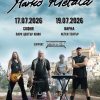
Dimitar Stefanov: You were in Sofia in April 2025 with Tarja, but Sofia on July 17 and Varna on July 19 are your first solo headline shows in Bulgaria. What does it mean to stand on those stages with your own story to tell?
Marko Hietala: We already had good success there with the solo band. I especially enjoyed Varna; we had some time off before the festival, so we got to go to the beach and jump into the Black Sea. It was a really nice summer; I enjoyed the place.
As for audiences, I think Bulgarians are enthusiastic and emotionally ready to show it. Because on the Bulgarian side and especially in the old Iron Curtain eastern countries, people still know how to react to the show. In a lot of Western Europe and North America, people have grown so sophisticated, and there’s been such an abundance of entertainment to digest, that they’ve kind of lost their immediate emotional reactions. They’re more into “Is this good enough for me?” mode. I would say if it is good enough, just go wild. And that’s what Bulgarian people have shown me they can do. I appreciate it.
Dimitar Stefanov: What can Bulgarian fans expect from the setlist, a celebration of Roses from the Deep, a broader look at your whole career, or something else?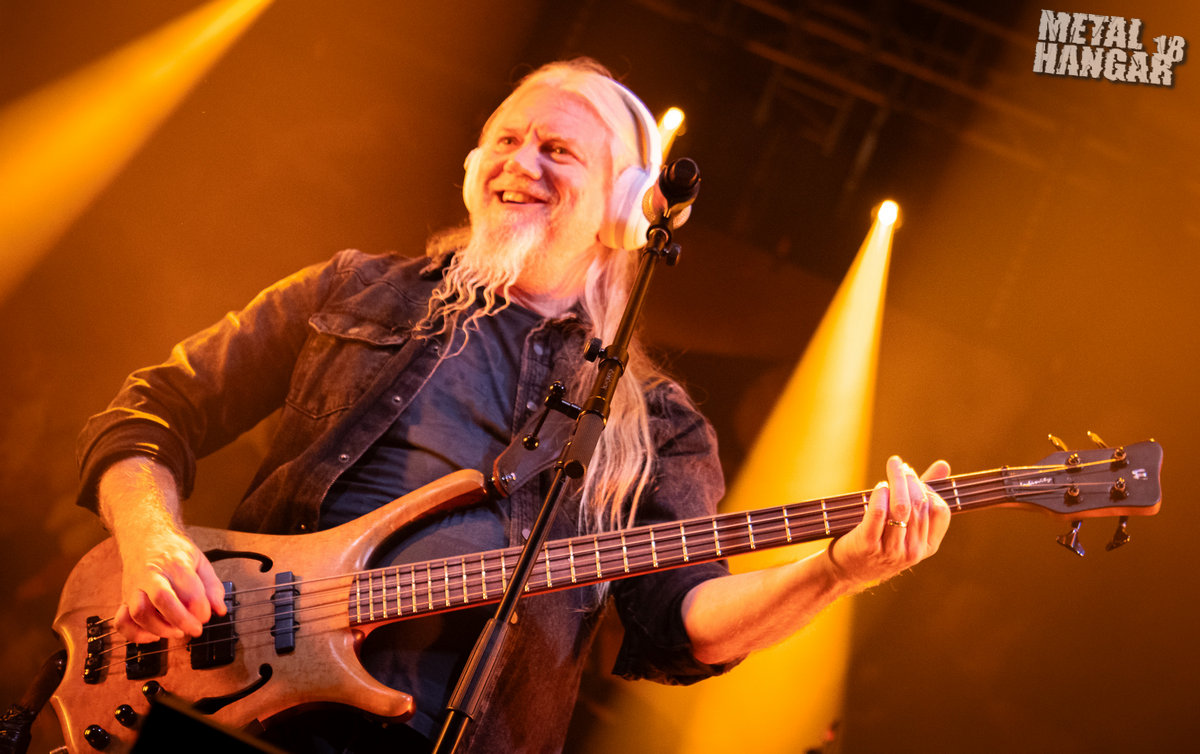
Marko Hietala: We need to take something from across it. We’ve been playing heavily weighted toward Roses from the Deep, but I think it’s time we took a couple more from the first one, Pyre of the Black Heart. And what I’d like to do is find one or two unexpected cover songs. Like we did with Bowie’s Starman. I’m not sure I’d do that exact one again; it was a fun one-off. But some good pieces we could handle with our own arrangement. I’ve got a very versatile, imaginative band.
Dimitar Stefanov: And finally, what do you want to say to Bulgarian fans?
Marko Hietala: I hope to see you in Sofia and Varna. I got a rock band. It plays heavy, it plays progressive and demanding stuff every now and then, or actually every show, and it’s still groove because at the bottom there is a rock band that can be very metal and very heavy and very broad. Come along and I think you’ll enjoy it.

-
 Интервю с MARKO HIETALA (NIGHTWISH, TAROT, SINERGY, NORTHERN KINGS) (0)
(for English – page 2)
Marko Hietala е едно от най-разпознаваемите имена във финландския метъл. Басист, певец и автор на […]
преди 2 часа
Интервю с MARKO HIETALA (NIGHTWISH, TAROT, SINERGY, NORTHERN KINGS) (0)
(for English – page 2)
Marko Hietala е едно от най-разпознаваемите имена във финландския метъл. Басист, певец и автор на […]
преди 2 часа
-
 VORGA от Германия и SIDIOUS от Англия със съвместен концерт (0)
Концертът ще е на 14-ти ноември 2026 г. в клуб Live & Loud (София, ул. Позитано №8).
Представяйки две различни, […]
преди 3 часа
VORGA от Германия и SIDIOUS от Англия със съвместен концерт (0)
Концертът ще е на 14-ти ноември 2026 г. в клуб Live & Loud (София, ул. Позитано №8).
Представяйки две различни, […]
преди 3 часа
-
 Thomas Youngblood (Kamelot), Static-X и Godsmack във „Фрактура“ (0)
На 21 юни (DIEMA, 24:00 ч.) в аудио-визуалната “Фрактура” ще бъде направена премиера на новите клипове на Billy Idol, Devildriver, […]
преди 7 часа
Thomas Youngblood (Kamelot), Static-X и Godsmack във „Фрактура“ (0)
На 21 юни (DIEMA, 24:00 ч.) в аудио-визуалната “Фрактура” ще бъде направена премиера на новите клипове на Billy Idol, Devildriver, […]
преди 7 часа
-
 VILLAGERS OF IOANNINA CITY с нов албум и сингъл (0)
Гръцките хеви рок визионери VILLAGERS OF IOANNINA CITY се завръщат с Venceremos, смелия и завладяващ нов студиен албум, който ще […]
преди 8 часа
VILLAGERS OF IOANNINA CITY с нов албум и сингъл (0)
Гръцките хеви рок визионери VILLAGERS OF IOANNINA CITY се завръщат с Venceremos, смелия и завладяващ нов студиен албум, който ще […]
преди 8 часа
-