Историята на метъла в Квебек от първо лице: Разговор с автора Ian Campbell
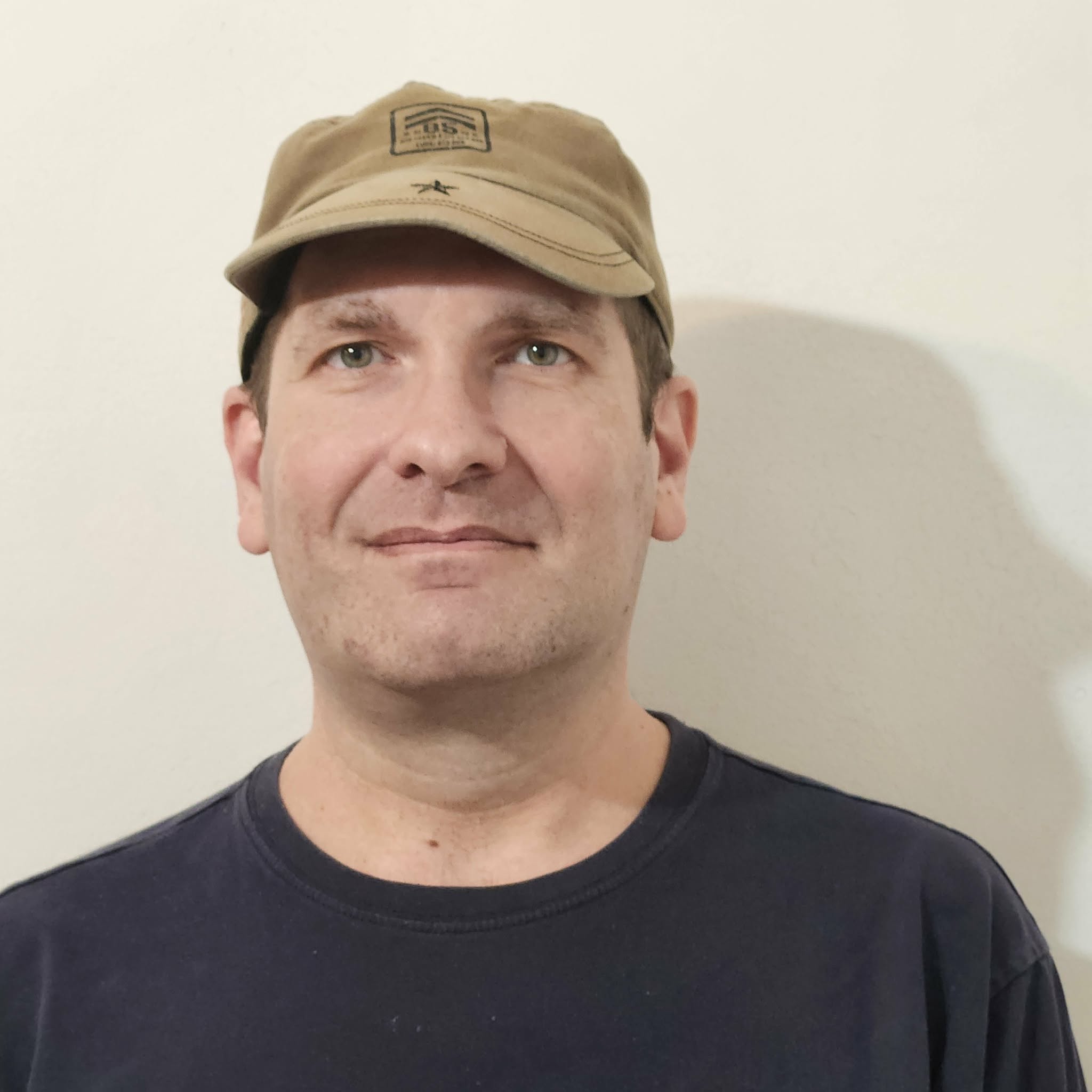
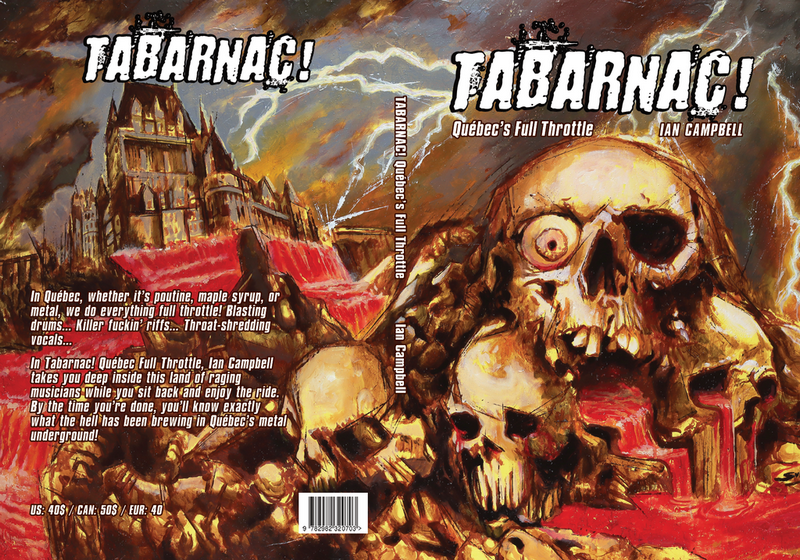
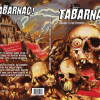
We recently shared the news about the release of the English edition of the book “TABARNAC! – Quebec’s Full Throttle (1989-1997)” (read more here), which documents the history of the metal and underground scene in Quebec. Today, we are pleased to welcome its author, Ian Campbell (former vocalist of Neuraxis), to the pages of Metal Hangar 18. In the following lines, we talk with him about the power of pre-internet DIY culture, forgotten bands from the 90s, and the parallels between the underground scenes in Canada and Eastern Europe.
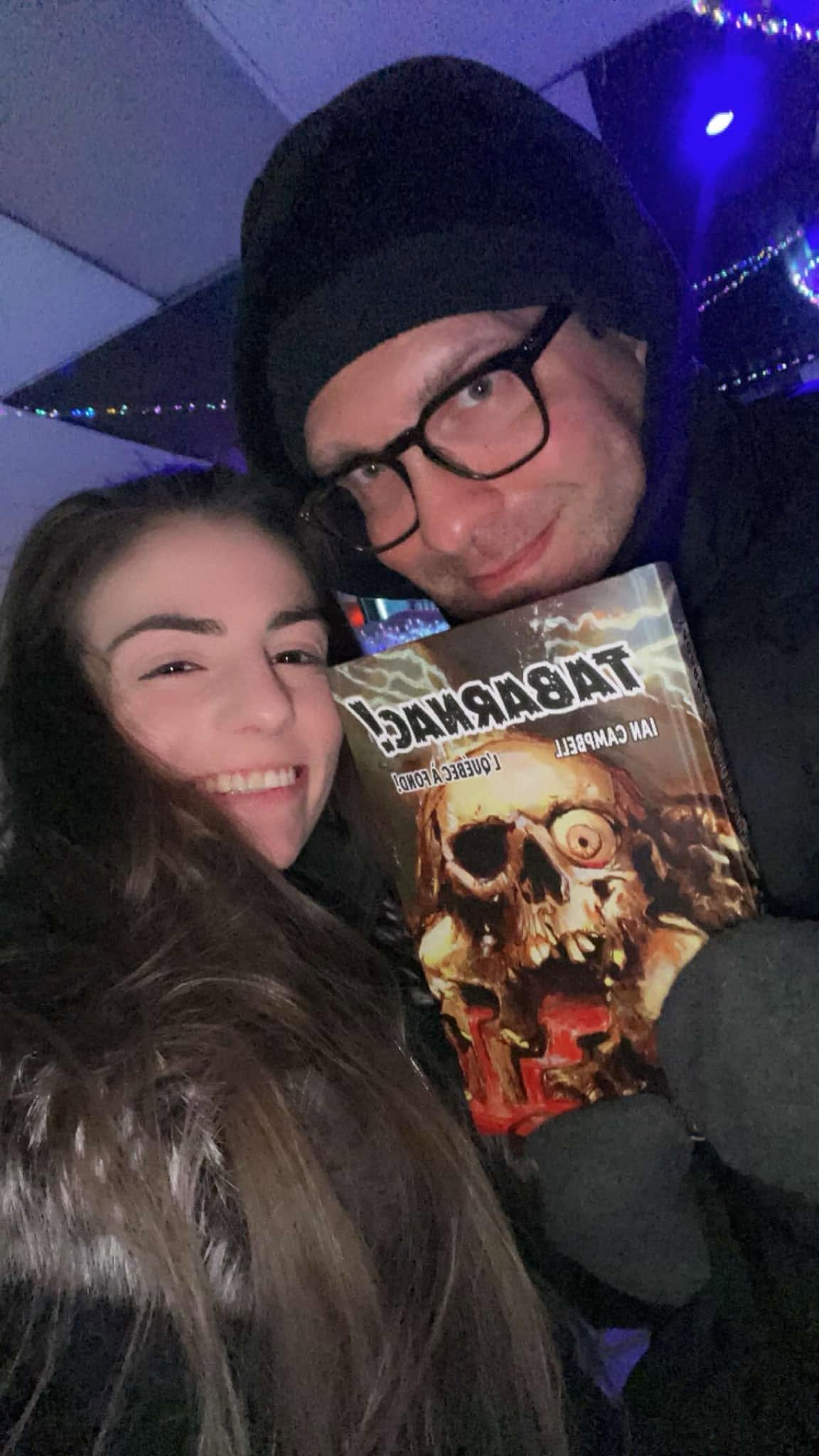
 Hi Ian! We are very glad to welcome you to the pages of Metal Hangar 18. “Tabarnac!” is an iconic Quebec expression loaded with rebellious energy. Why did you choose this exact word as the title for your book about the local underground?
Ian: I honestly don’t think there could have been a more Quebec title than TABARNAC!
For people outside Quebec, it can simply sound like a swear word, something aggressive or rebellious. And of course, it can absolutely be all of those things. But here, tabarnac carries much more than one meaning. Everything depends on the context and the way you say it.
It can express anger, surprise, admiration, frustration, disbelief or excitement. Sometimes one word is enough to communicate an entire reaction.
And that felt very appropriate for the story I wanted to tell.
Quebec’s metal underground was never built under perfect circumstances. People created bands, promoted shows, made fanzines, traded tapes, hosted radio shows, opened their record stores to extreme music and found ways to make things happen with whatever resources they had.
There is something very Quebec about that attitude: if nobody is going to build it for us, tabarnac, we’ll build it ourselves.
I also wanted a title that had personality. I didn’t want something academic like The History of Quebec Metal, 1989–1997. The research is serious, but the people and culture documented in the book were alive, loud, excessive, funny, sometimes chaotic and incredibly passionate.
TABARNAC! immediately tells you where the book comes from.
It is French Canadian. It is Quebec. It has attitude. It has humour. It has weight.
And perhaps most importantly, you don’t need to translate the word perfectly to understand its energy.
That made it the perfect title.
Quebec is a French-speaking island in English-speaking North America. To what extent did this isolation help give birth to such a technical and unconventional metal sound, represented by bands like Voïvod, Gorguts, and Cryptopsy?
Ian: I think Quebec’s linguistic and cultural position definitely played a role, but I would be careful about treating isolation as the single explanation.
Quebec is a French-speaking culture surrounded by an overwhelmingly English-speaking North America. When you grow up in that environment, there is already a certain awareness that you are part of North America, but you are also culturally distinct from it.
Musically, I think that created an interesting position. Quebec musicians could absorb what was happening in American thrash, death metal, hardcore and punk, while also being exposed to European metal, progressive music, jazz and other influences. But they didn’t necessarily feel obligated to reproduce any one of those scenes exactly.
Voïvod was enormously important in that respect. They demonstrated that a Quebec band could be strange, progressive, aggressive, unconventional and completely personal. They didn’t need to sound like the Bay Area, New York or anywhere else to be legitimate.
Later, bands such as Gorguts and Cryptopsy pushed that freedom in completely different directions.
That’s why I’m not convinced there is one specific “Quebec sound.” Gorguts doesn’t sound like Voïvod, and Cryptopsy doesn’t sound like either of them.
What I see instead is a Quebec way of creating metal: take influences from everywhere, process them through your own identity, develop your musicianship and don’t be afraid to create something that doesn’t fit comfortably into an established category.
Being somewhat culturally isolated may actually have helped that mentality. When you already exist slightly outside the dominant culture around you, perhaps being musically different doesn’t seem quite as frightening.
So, once again, I would describe Quebec metal as “variety within brutality.”
The common thread isn’t one particular sound.
It’s the audacity to create your own.
 The main protagonist of your book is the pre-internet scene—demo tapes, tape trading through the mail, and photocopied fanzines. What did the metal community lose when this slow, physical communication disappeared?
Ian: I think what we lost was the ritual of discovery.
I don’t want to romanticize the pre-Internet era, because today we have extraordinary access to music. A band can release something and, within seconds, somebody on the other side of the world can hear it. That is incredible.
But in the old tape-trading days, discovering music required effort, patience and human contact.
You would read about a band in a fanzine, find an address, write a letter, send a tape or some money, and then wait. Sometimes for weeks. When that envelope finally arrived, the experience had weight. You opened it, read the letter, examined the flyer, looked at the photocopied artwork and listened to the cassette from beginning to end.
You weren’t simply downloading music. You were building a relationship with another human being.
Those exchanges created networks. One person gave you another address. One demo led to another band. One fanzine introduced you to a completely different scene. Eventually, people who had never met face to face could become friends because they had been exchanging music and letters for years.
And today, those physical objects have become incredibly important historically.
Letters, fanzines, flyers, demo tapes and correspondence survived in people’s personal collections. Thirty years later, I can sometimes hold the actual document that proves that something happened.
So yes, the Internet gave us speed, accessibility and an almost unlimited amount of music.
But I think we lost some of the anticipation, physical connection and personal investment that came with discovering something slowly.
Before the Internet, music sometimes had to travel thousands of kilometres before reaching your hands.
Maybe that journey was part of what made the discovery feel so precious.
You also dedicated space to bands with just one or two demos that vanished afterward. Could you share one story about such a nearly forgotten band or person without whom the Quebec scene wouldn’t have been the same?
Ian: That’s actually one of the reasons I wanted to write TABARNAC!: historical importance isn’t always measured by the number of albums a band released.
A great example would be Obskur from Rimouski. They never built the kind of large discography that usually guarantees a band a permanent place in metal history, but their local impact went much further than the recordings themselves.
What fascinates me about a band like Obskur is the effect they could have on young people in the Bas-Saint-Laurent region. Seeing people from your own part of Quebec playing this kind of extreme music could make something suddenly seem possible. Instead of looking only toward Montreal or toward international bands and thinking, “That world is somewhere else,” younger musicians could look at Obskur and think: “We could start a band too.”
That kind of influence is incredibly difficult to measure thirty years later.
And the same principle applies to individuals behind the scenes.
Pierre Rémillard of Obliveon, for example, was important not only as a musician, but through his work as a sound engineer. Louise Girard, through Sang Frais Magazine, represents another essential part of the story: the people who documented and circulated the culture while it was actually happening.
Then there are people my research allowed me to appreciate differently, such as Michel Monette, who became involved in several different aspects of the scene, playing music, organizing, promoting and distributing.
These are exactly the kinds of people and bands that can disappear when metal history is reduced to discographies and famous albums.
Some people make records. Some people make it possible for a scene to exist. And sometimes the people who do both are the ones history is most likely to underestimate.
In the 90s, thrash, death, black metal, grindcore, and punk all coexisted in Quebec. Was there division among the fans back then, or did the lack of venues force everyone to share the same basements and clubs?
Ian: There were tribes, absolutely, but I think the walls between those tribes were much more porous than people sometimes imagine today.
You had fans who were deeply committed to thrash, death metal, black metal, grindcore, hardcore or punk, and of course people had their preferences. There could be debates, cliques and arguments about what was “real” or what belonged where. Metalheads have always been pretty good at arguing about categories! haha!!
But the reality of the underground was often much less rigid.
There simply weren’t enough venues, promoters or opportunities for every subgenre to exist inside its own perfectly separated world. Bands and audiences crossed paths. Metal, punk, hardcore and crossover could end up sharing the same spaces, and sometimes the same bills.
That was particularly true outside the major centres. In a regional scene, you couldn’t always afford to say, “I only support this exact subgenre.” If somebody was organizing a heavy show, you went. If a band was coming through town, you wanted to see them.
And some Quebec bands naturally blurred those boundaries anyway. B.A.R.F., GrimSkunk, Groovy Aardvark and Anonymus, for example, existed in musical spaces where metal, punk, hardcore, crossover or alternative influences could intersect in different ways.
That interaction was healthy because people were exposed to music they might not have deliberately sought out otherwise.
So yes, divisions existed, but necessity created coexistence.
And sometimes sharing the same basement, club or concert bill with people from another musical tribe was exactly how those walls started coming down.
 You were part of this scene yourself, and later became the vocalist for Neuraxis. Was it difficult to step into the shoes of an objective researcher, especially when people’s memories of the exact same events contradict each other?
Ian: Absolutely. One of the biggest challenges is accepting that memory and history are not exactly the same thing.
People can attend the same concert, know the same band or experience the same event and come away with completely different memories of what happened. Then thirty years pass. Dates become blurry, two different events can merge into one, details disappear, and sometimes a story has been repeated for so long that the version everybody remembers becomes almost more powerful than the original event.
That’s why I try to treat every testimony with respect, but also with caution.
And that includes my own.
My own memory is a source, but it never gets special treatment simply because it belongs to me.
Whenever possible, I compare memories with material that actually survived from the period: flyers, fanzines, demo tapes, photographs, letters, magazines, advertisements, newspaper articles, correspondence and other archives.
Sometimes something as simple as an old concert flyer can settle a disagreement about a date, a lineup or a venue.
But contradictions can also be historically interesting. They remind us that an underground scene wasn’t experienced in exactly the same way by everybody. A musician, promoter, journalist and fan could all remember the same night differently because each person was standing somewhere else, both literally and figuratively.
So I don’t necessarily see contradictory memories as something that always has to be eliminated.
Sometimes the disagreement itself tells us something about the history.
My responsibility as a researcher is to gather as many perspectives as possible, compare them with the available documentation, and be honest when absolute certainty simply isn’t possible.
I don’t want TABARNAC! to become “Ian Campbell’s version of Quebec metal history.”
I want it to feel like a collective memory reconstructed from hundreds of fragments.
And perhaps that is the most honest way to document an underground culture: not pretending that one person remembers everything correctly, but allowing all those different voices and surviving pieces of evidence to build the larger picture together.
The original French edition is already sold out, and now the book is coming out in English. Was there specific Quebec slang and humor that proved difficult to translate for an international audience?
Ian: Absolutely. The challenge wasn’t simply translating French into English. It was translating Quebec without translating Quebec out of the book.
There are expressions, swear words, jokes and ways of telling a story in Quebec French that simply don’t have a perfect English equivalent. TABARNAC! itself is probably the most obvious example. You can explain what the word means, but no English word carries exactly the same combination of anger, humour, surprise, emphasis and cultural identity.
And I didn’t want the English edition to sound as if the entire story had suddenly taken place somewhere else.
That was one of the reasons I was very fortunate to work with Laurie-Ann Desjardins on the English translation. The objective wasn’t to produce an excessively literal translation. It was to preserve the meaning, rhythm, personality and humour of the original while making the book feel natural to an English-speaking reader.
The firsthand testimonies were particularly important in that respect. These are real people remembering their youth, their bands, concerts, disasters, friendships and adventures. If you polish their voices too much, you can easily remove the personality that makes those stories worth reading in the first place.
Quebec humour can also be very difficult to export. There’s a lot of exaggeration, self-deprecation, colourful language and a particular rhythm in the way people tell stories here. Sometimes translating every word correctly can actually make the joke disappear.
So we occasionally had to preserve the spirit rather than mechanically reproduce the sentence.
And certain things simply needed to remain Quebecois.
The greatest example is obviously the title itself.
TABARNAC! stays TABARNAC!
Because sometimes the best translation is knowing what not to translate.
In Bulgaria and Eastern Europe during the 90s, the scene was also built from scratch using dubbed tapes and DIY ethics. Do you see similarities in the way isolated underground communities around the world survive and grow?
Ian: Absolutely. I think there are strong parallels, even though the political, economic and cultural realities of Quebec and Eastern Europe were obviously very different.
What interests me is the underlying instinct.
When the infrastructure doesn’t exist, you build it yourself.
That is probably one of the most universal characteristics of underground culture.
In Quebec, especially before the Internet, you couldn’t simply wait for an established industry to take care of everything. Fans became promoters. Musicians organized shows. People created fanzines, hosted radio programs, traded and copied tapes, distributed demos and created networks with people they had never met.
From what you describe about Bulgaria and Eastern Europe in your question, I immediately recognize that same DIY mechanism: copied tapes circulating from person to person, information being exchanged through informal networks, and people creating something because they were passionate enough to make it happen themselves.
And isolation can produce something interesting.
It can obviously make things more difficult, but it can also force people to become resourceful. If there is no promoter, somebody becomes the promoter. If there is no magazine covering your music, somebody starts a fanzine. If nobody is bringing the bands you want to see, you try to organize the show yourself.
Eventually, the fan becomes an active participant in the culture.
I think that is how many underground communities survive. They stop waiting for permission or recognition from the outside world.
The technology changes. The countries change. The languages and circumstances change. But that basic impulse is remarkably similar.
That is also one reason I’m so happy to see TABARNAC! reaching readers in Bulgaria. I suspect that some Bulgarian old-school metal fans will recognize aspects of their own experience in these stories, even though they happened thousands of kilometres away in Quebec.
Maybe that is one of the beautiful things about underground metal:
the scenes are local, but the instinct behind them is universal.
You are already working on the second part of the book, covering the 1998–2008 period. How did the rise of the internet and the global breakthrough of Quebec technical death metal change the rules of the underground during that decade?
Ian: I think the period from 1998 to 2008 represents a fundamental change in the rules of the underground.
The previous era was largely about building the infrastructure yourself. The next era became about learning how to operate in a world that was suddenly becoming connected.
The Internet dramatically shortened distances. Instead of relying almost entirely on letters, fanzines, physical demos and tape trading, bands could gradually communicate much faster with promoters, labels, media, musicians and fans outside Quebec. The international underground became much easier to reach.
But that also created a new challenge.
In the old days, the problem was often getting heard at all. As more music moved online, the problem increasingly became getting noticed among everything else that was suddenly available.
At the same time, Quebec extreme metal itself was entering another phase internationally. Gorguts’ Obscura arrived in 1998, and the band describes that period as one in which it was expanding and redefining the language of death metal. Their official biography also notes that Quebec later became a focus for technical death metal, citing bands including Cryptopsy and Neuraxis.
I experienced part of that transition directly with Neuraxis. The group was active through the 2000s, and my years as vocalist included A Passage into Forlorn, Truth Beyond… and Trilateral Progression.
So the DIY mentality didn’t disappear. The tools changed.
You still needed musicians willing to rehearse constantly, somebody to book the shows, somebody to promote them, somebody to release the music and fans willing to support it. But suddenly those efforts could reach far beyond your immediate geography much faster than before.
That transformation is one of the reasons Légitime Défonce, covering 1998–2008, fascinates me so much.
The first era asks: How do you build an underground when almost none of the infrastructure exists?
The next asks: What happens to that underground once the entire world starts becoming connected?
And having personally lived through part of that transition with Neuraxis makes this next chapter both exciting and much more personal for me.
Absurd and comical Spinal Tap-style situations always happen in the underground. What is the most unforgettable or bizarre story from those years in Quebec that you either witnessed yourself or uncovered during your research?
Ian: There are so many ridiculous stories that it’s difficult to choose, but one involving Dèche-Charge and Anal Cunt is almost impossible to beat.
During a show on June 22, 1993, Chainsaw, Dan-Charge and GoShit from Dèche-Charge approached the guys from Anal Cunt with the idea of doing a split release together.
Let’s just say the proposal was not received with great diplomatic enthusiasm.
The Dèche-Charge guys felt they had been treated pretty badly, and GoShit decided that some form of revenge was required. True to the completely insane spirit surrounding parts of the underground at the time, he prepared an obscene prank letter (he masturbated himself and cum on the letter) for Anal Cunt and mailed it to their correspondence address in Massachusetts.
For a while, apparently nothing happened.
End of story, right?
Not exactly.
Two years later, Anal Cunt released a song called “Deche Charge Are a Bunch of Fucking Losers.” The track really exists, appearing on their 1996 album 40 More Reasons to Hate Us.
You can imagine the reaction from the Dèche-Charge guys.
Most bands would probably be offended to have Anal Cunt write a song insulting them.
For these guys, it was practically a badge of honour.
And that story says something wonderful about documenting underground history. If you only look at discographies, you see a bizarre 27-second song title on an album.
But when you start talking to the people who were actually there, suddenly there’s an entire ridiculous human story behind those 27 seconds.
That’s exactly the kind of history I wanted TABARNAC! to preserve.
Finally, what would you like to say to the readers of Metal Hangar 18 and the old-school metal fans here in Bulgaria who are about to pick up your book?
Ian: First of all, I would simply like to say thank you.
The idea that a book written in Quebec about our underground scene between 1989 and 1997 can now reach old-school metal fans in Bulgaria is honestly something I find pretty amazing.
We were thousands of kilometres apart, speaking different languages and living in very different circumstances, but as we discussed earlier, there are things about underground culture that seem almost universal.
You discover a band. You copy a tape. You tell a friend. Somebody starts a fanzine. Somebody else organizes a show. A few people decide to start their own band.
And suddenly, almost without realizing it, you have created a scene. That is really what TABARNAC! is about.
Of course, readers will find Voïvod, Gorguts, Cryptopsy, Kataklysm, Obliveon, Neuraxis and many other bands in the book. But I hope Bulgarian readers become just as interested in the names they have never heard before.
If this book makes somebody in Bulgaria search for an old Quebec demo, discover a forgotten band, look up a fanzine or become curious about one of the people who helped build the scene behind the famous names, then I will be extremely happy.
And I also hope readers recognize something of their own underground history in ours.
Different countries. Different languages. Different circumstances.
But that same stubborn DIY instinct:
If nobody is going to build the scene for us, we’ll build the damn thing ourselves.
So to everyone at Metal Hangar 18 and to the Bulgarian metalheads reading this interview: thank you for welcoming TABARNAC! into your part of the world.
Keep supporting the bands. Keep preserving the old stories. Keep digging through those archives.
And most importantly, keep the underground alive.
Metal greetings from Quebec!
Ian Campbell
Author: Yuliy Vayer REYAV

-
 Историята на метъла в Квебек от първо лице: Разговор с автора Ian Campbell (0)
Наскоро ви представихме новината за излизането на англоезичното издание на книгата „TABARNAC! – Quebec’s […]
преди 20 минути
-
 KHANЪ с ново видео и специален акустичен сет за Варна и Габрово (0)
Нов видеоклип от изпълнение на живо на „Огнен меч“ улавя концертната емоция на KHANЪ, а публиката в Габрово и Варна […]
преди 1 час
-
 INNERVATE представят новото си видео „Washed Away“ (0)
Младата софийска метъл формация INNERVATE представи официалния видеоклип към новия си сингъл „Washed Away“. Песента е първият сингъл от предстоящото […]
преди 1 час
-
 CARCASS за първи път в България през март 2027 г. (0)
Със специалното участие на финската грайндкор шайка ROTTEN SOUND и американската спийд траш бригада BAT (с двама музиканти от […]
преди 16 часа
-